Wear
Tucked, untucked,in between.
The same T-shirt can rebalance a silhouette depending on where it lands.
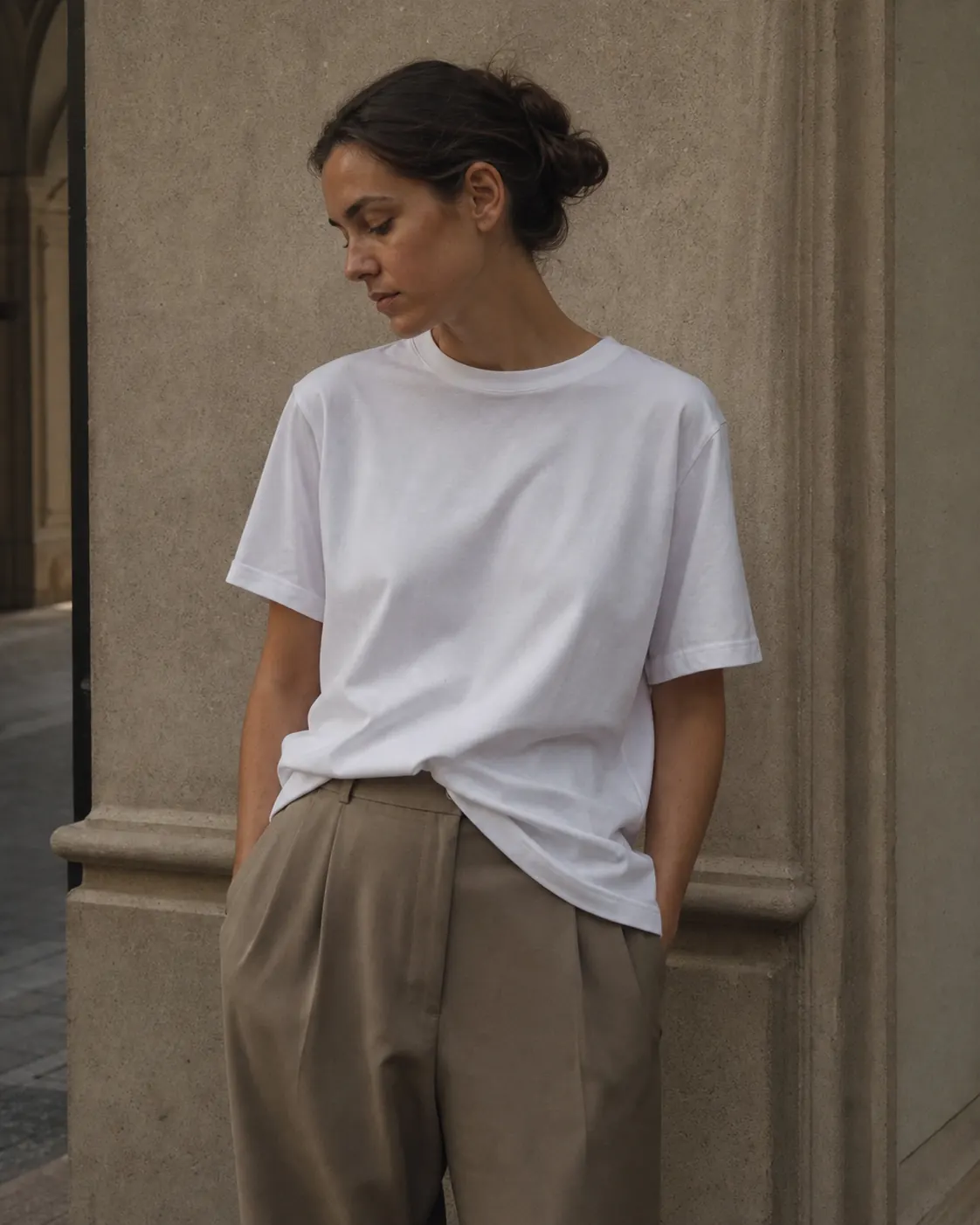
STARTING POINT
You do not change T-shirt. You only move the line where it stops.
That line changes how the torso and legs are read. The right placement depends on the intended result, the trousers, the real length of the T-shirt and what happens when the body moves.
Tucked in: the waistbecomes visible.
Fully tucking the T-shirt makes its edge meet the waistband. The trouser waist and the gathered fabric become more visible.
Observe the volume at the waist, how it holds when sitting and any transparency created by folds.
Untucked: the hemdraws the torso.
The hem becomes a horizontal line. The lower it sits, the longer the torso appears. A straight fit keeps a clean line; a soft jersey follows the body more.
The useful measurement is not only the stated size, but the real back length.
In between:a chosen asymmetry.
A partial front tuck shows the waistband while keeping some drape. The effect depends on the width of the T-shirt and the fabric’s hold.
This placement moves more: observe it standing, sitting and walking.
Fabric decideswhether the gesture holds.
A very soft jersey forms small folds and moves easily. A more constructed fabric keeps a steadier line but creates more thickness at the waist.
Fabric weight can guide the search, without predicting drape on its own.
IN THE CABIN
Look for a length,not an instruction.
After this article, compare stated length, fit, fabric weight and available measurements. When information is missing, the record says so.